Shed slab in Dubbo: the approval question first
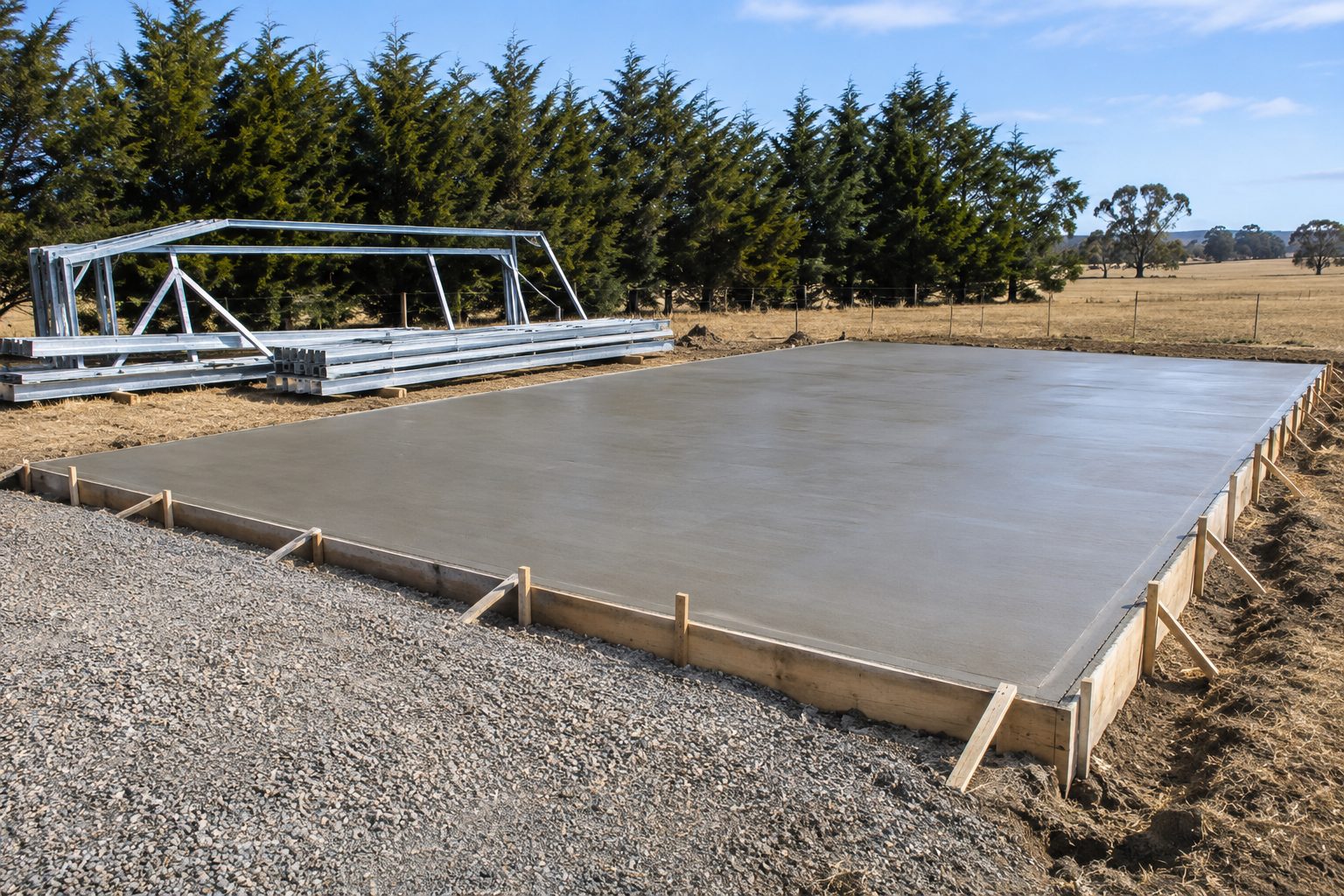
A shed slab in Dubbo is a concrete floor poured for a shed or garage. Before the pour, one question matters more than the finish: does the slab need approval? The public pages we read do not settle it. The NSW state planning policy has exempt development rules for garden sheds, with limits that differ by zone, but the pages do not say whether a shed's floor slab is covered by that shed exemption. So the answer is: ask council or a certifier, and ask before the concrete is ordered.
For a garage slab, the pages we read do not state an approval pathway either. Approval depends on the project; ask council or a certifier. This page is a referral service, so your enquiry goes to a local concreter, who does the work and is responsible for holding any licence or certificate that applies.
Who to ask at Dubbo Regional Council
Council's page on types of development applications says a development application is needed if a project does not fit the state's fast-track pathways. It points readers to the Dubbo Regional Local Environmental Plan 2022 and the NSW ePlanning Spatial Viewer to find their zone, and it offers a free Duty Planner appointment on (02) 6801 4000, which is council's number (council page on types of development applications).
Bring the address, the size of the building and a sketch of where the slab sits on the lot. Ask whether the slab and the shed are treated together, and what a certifier would need to see. The approvals guide has the state limits for driveways, paths and sheds, with caveats.
What the council plan says about sheds and garages
The Dubbo Development Control Plan 2013 has an element on detached development, outbuildings, sheds and garages (Dubbo DCP 2013). We read only the first part of that document, and the text of that element was not in it. So this page cannot say what it requires. Ask council whether it applies to your lot and what it asks for.
The state rules also limit the total hard surfaces on a lot, which can include driveways, paths and paved areas. This page gives no numbers, because they sit on the approvals guide. If a shed slab and a driveway to it add a lot of hard surface, say so when you ask council.
Rural land and the shed rules still being considered
NSW Planning's page on outbuildings in rural areas says proposed changes to shed and farm building size requirements were on exhibition and are still being considered (NSW Planning page on outbuildings in rural areas). So check the current limits before you rely on any shed size you have heard. Rural blocks around Dubbo, Wellington and Narromine can differ from town lots, so ask council about the zone. The Narromine page has local facts for farm and shed work there.
What to tell the concreter about the building
| Tell the concreter | Why it matters |
|---|---|
| Size and use of the building | A hay shed, a workshop and a garage ask different things of the slab. |
| Vehicles, machinery or stock | Heavier loads usually mean a different slab design. Ask what they are designing to and why. |
| The shed supplier's requirements | Ask the shed supplier or an engineer what the slab must be, and pass it on. |
| Access for a truck and a pump | Gates, slope, soft ground and overhead lines change how concrete is delivered. |
| Falls and drainage | Ask which way water runs and where it ends up, so it does not run toward the building. |
| Whether council or a certifier has been asked | The approval answer can change the start date. |
Whether the slab needs to match a drawing from the shed supplier is a question for the supplier or an engineer. This site gives no specification, because none of the sources we read give one that is safe to repeat.
Hot weather and cracking on a large slab
A concrete supplier's technical page says hot days, wind and low humidity can cause cracks, and that joints should be planned and cut early (a concrete supplier's technical page). Ask how the joints are laid out, and how the concreter plans for hot, windy days. The cracking and hot weather guide covers what the sources say. To compare written quotes, use the quote check, and for a driveway to the shed see the driveways page.
When you are ready, send the details through the enquiry form.
What this page cannot do
It cannot say whether your shed or garage slab needs approval, because the pages we read do not settle it and the answer depends on the zone, the lot and the building. It cannot say what size of shed is allowed now, because proposed changes are still being considered. It cannot design the slab or give a price. Ask Dubbo Regional Council or a certifier about approval, ask the shed supplier or an engineer about the slab, and ask NSW Fair Trading about any licence question.
Check the current rules before you rely on this
This page describes what the public pages say about approval for shed and garage slabs and where they stop. It describes the rules in general terms as they stood in November 2026. Standards, forms, thresholds and fines change.
The authoritative sources are Dubbo Regional Council, types of development applications, NSW legislation, State Environmental Planning Policy (Exempt and Complying Development Codes) 2008, in force version as returned, NSW Planning, outbuildings in rural areas (exhibited changes still being considered), Dubbo Regional Council, Dubbo Development Control Plan 2013 (adopted version, first part only) and NSW Planning Portal, exempt development: driveways, pathways and paving. Where anything here differs from those sources, they are right and we are not.
We are not concreters, builders, certifiers, regulators or lawyers. For what applies to your job, ask the concreter for their licence details and check them on the NSW Government licence check, ask NSW Fair Trading if you are unsure, and ask the council that covers the land about approvals.
Accurate at the time of writing, November 2026. Always check the source before relying on it.