Exposed aggregate concrete and the other finishes
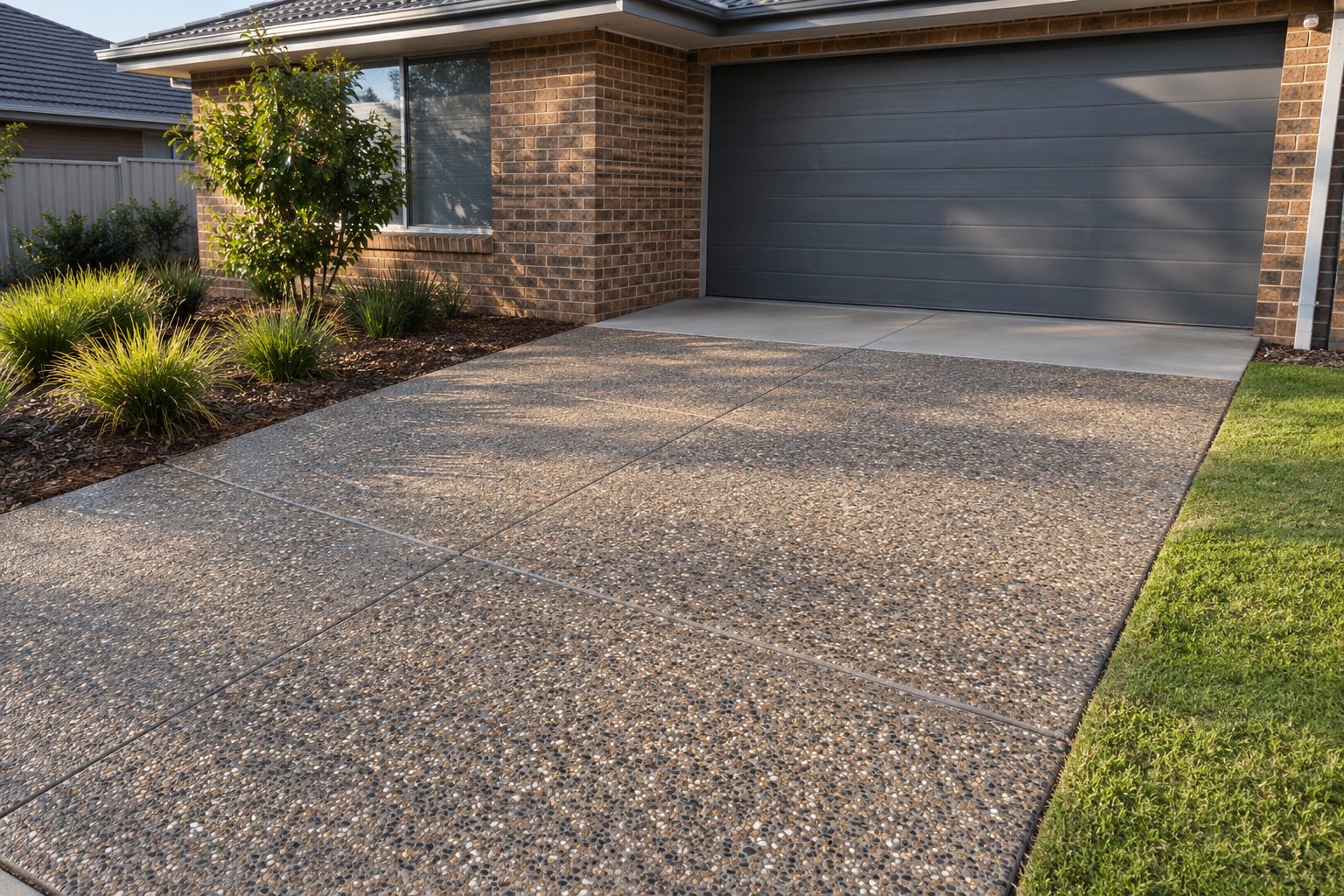
Exposed aggregate concrete is one of five finishes people ask about for driveways, paths and patios in Dubbo. The others are plain broom finish, coloured concrete, stencilled concrete and stamped concrete. This guide says what each one is in a sentence and then lists what to ask. We found no source that gives performance figures for any finish, so there are none here.
Which finish suits your site is a conversation with the concreter. If you are weighing a driveway, the page on concrete driveways in Dubbo covers buying questions and approvals. For a path or patio, see paths, patios and alfresco areas.
| Finish | What it is, in one line | First question to ask |
|---|---|---|
| Plain broom finish | A basic surface with fine lines from a broom drawn across the wet concrete. | What texture the concreter proposes for the site |
| Exposed aggregate | A surface where the stones in the concrete are made visible, rather than covered by a smooth top layer. | Can I see a finished sample in similar stone? |
| Coloured concrete | Concrete with colour added, either through the concrete or on its surface. | Which method is proposed, and how will the colour look when finished? |
| Stencilled concrete | A pattern formed on the surface using a stencil, usually with colour or texture added. | How is the pattern made, and what will it look like at the joints? |
| Stamped concrete | A pattern pressed into the surface while the concrete can still be worked. | How does this differ from a stencilled finish for my site? |
Questions to ask about exposed aggregate concrete
Ask to see a finished sample or photos of a completed job in the same kind of stone, and ask what the surface will look like once it is finished, not only when it is wet. Ask how the stones will be chosen and whether the quote names them. The sources we read say nothing about where aggregate comes from in the Orana, so we make no claim about it.
Questions to ask about coloured concrete
Ask whether the colour goes through the concrete or sits on the surface, because the two are different jobs and a quote may price them differently. Ask what the colour will look like in sun and in shade, and whether a sample can be shown on site. Ask also how the concreter keeps the colour even across the whole area on a hot day.
Questions to ask about stencilled and stamped concrete
Stencilled and stamped finishes both aim at a patterned surface, and the words are sometimes used loosely. Ask the concreter to explain the method they mean, with a photo. Ask where the joints will fall relative to the pattern, because a pattern has to meet joints and edges somewhere, and ask what the pattern will look like at a path edge or a step.
Can a decorative finish go over an old driveway?
We found no source that answers this, so we do not. Whether a decorative finish can go over existing concrete depends on the state of the old surface, and only a concreter who has seen it can say. Ask the concreter to explain what condition the old concrete needs to be in, and what the alternative is if it is not suitable. If the old concrete has to come out, the removal guide covers cutting and dust.
Sealers, cleaning and hot weather
Ask whether a sealer is used on the finish you choose, what the concreter recommends and why, and how the surface is cleaned. We give no sealing interval, because the sources we read give none.
Hot weather matters for decorative work as much as for plain slabs. Dubbo Airport averages 32.2 days a year at or above 35 degrees C, according to the Bureau of Meteorology, and the Housing Industry Association has published an article on designing pavements to avoid cracking (HIA article). Ask the concreter how a decorative surface is protected while it cures. The cracking and curing guide sets out the climate figures and what the sources do and do not say.
What a quote should list for a decorative finish
A decorative finish should be named on the quote, not hidden in a total. Look for the finish and the method, any colour and how it is applied, the sealer if one is used, the joints and where they go, how the surface is protected while it cures and how it is cleaned. The quote check guide has a table for comparing quotes line by line. Ask the concreter for their licence details and check them on the NSW Government licence check, then send your enquiry with a photo of the site and the finish you have in mind.
What this guide cannot do
This guide cannot tell you which finish to choose, how a finish will perform on your site or whether it can go over existing concrete. The sources we read give finish names but no performance, sealing, slipperiness or colour information, so we make no claims. The one-line descriptions are plain definitions, and the concreter may use the words differently. We are a referral service: your enquiry goes to a local concreter, who is responsible for holding any licence or certificate that applies to the work.
Check the current rules before you rely on this
This page describes the main decorative concrete finishes and the questions to ask a concreter, with Dubbo Airport climate figures and industry guidance on cracking. It describes the rules in general terms as they stood in November 2026. Standards, forms, thresholds and fines change.
The authoritative sources are Housing Industry Association, designing pavements to avoid cracking (24 May 2022), Bureau of Meteorology, climate statistics for Dubbo Airport AWS (station 065070) and NSW Government, general concreting work (licence or certificate). Where anything here differs from those sources, they are right and we are not.
We are not concreters, builders, certifiers, regulators or lawyers. For what applies to your job, ask the concreter for their licence details and check them on the NSW Government licence check, ask NSW Fair Trading if you are unsure, and ask the council that covers the land about approvals.
Accurate at the time of writing, November 2026. Always check the source before relying on it.