Concrete patio and paths in Dubbo: the project
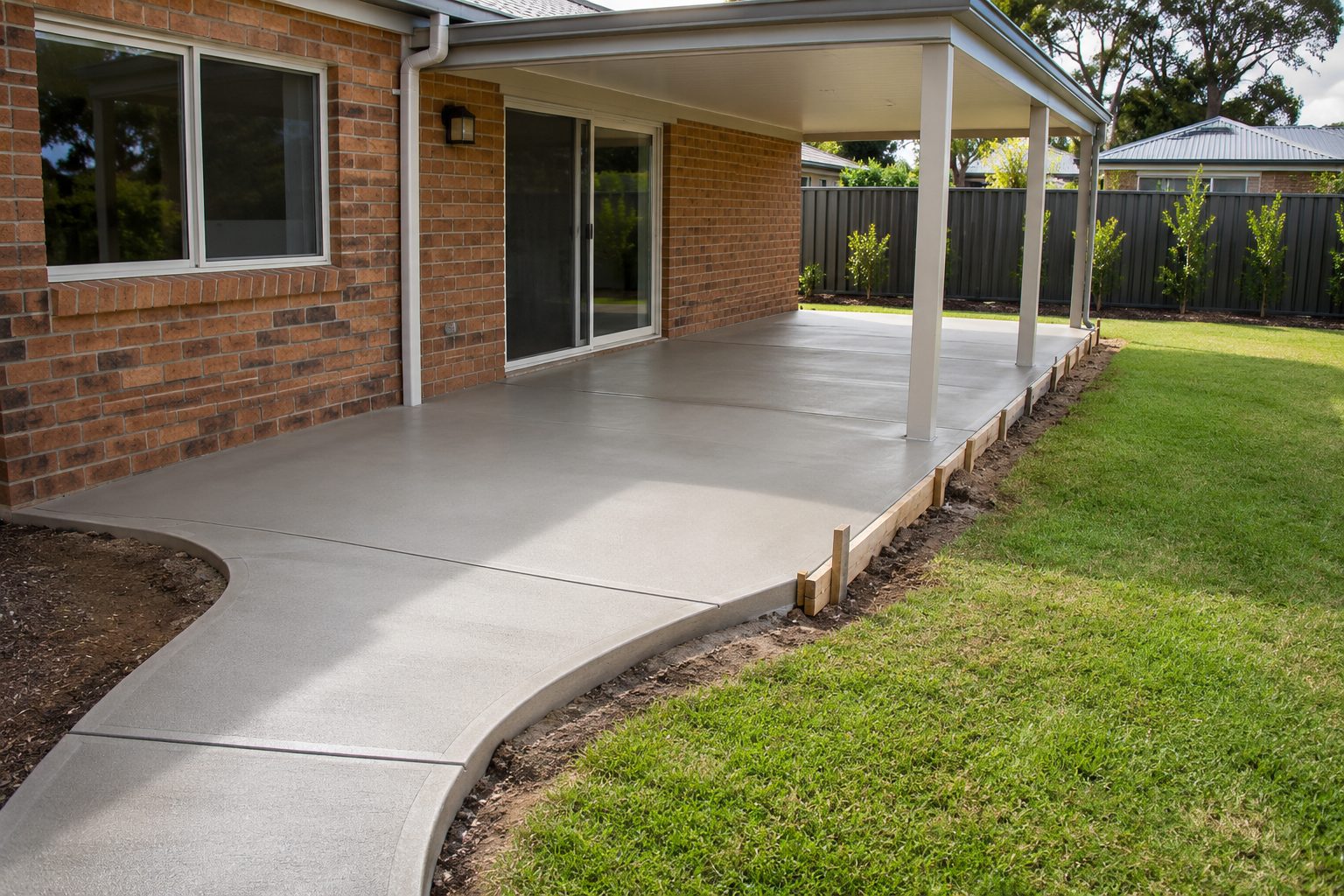
A concrete patio in Dubbo is usually a slab at the back of the house, often under an alfresco roof, with a path linking it to the garage, the side gate or the clothesline. It is a small job with several places to go wrong: where the water runs, how the slab meets the house wall, and how it handles a Dubbo summer. This page lists the questions to ask. It is a referral service, so your enquiry is passed to a local concreter, who does the work and is responsible for holding any licence or certificate that applies.
Do paths and paving need approval?
The NSW planning pages describe exempt development rules for pathways and paving (NSW Planning Portal page on driveways, pathways and paving). In the version we found, they set limits on the total area of hard surface on a lot, changes to ground level and the share of landscaped area, and they want runoff to go to a drainage system connected to the existing stormwater system. A job that cannot meet all the limits needs a development application to council.
This page gives no numbers, because they sit with caveats on the approvals guide. Whether a patio slab is covered by the approvals for a roof or structure above it is not stated in the pages we read. Ask council or a certifier. Never assume a path or patio is covered; ask before you order concrete.
Questions from an interstate list of common defects
The Dubbo sources we read have no list of common path and patio faults. A Queensland regulator's list of common driveway and path defects, an interstate source, is a useful set of questions (Queensland regulator's driveway and path defects page). It is not NSW guidance, and it is not a standard for Dubbo. As a checklist, it names:
- cracking linked to movement, drying and environmental conditions;
- reinforcement that drops to the bottom of the slab instead of sitting where it should;
- fast drying in hot, windy weather, with early surface cracks;
- water ponding at slab edges because of incorrect falls;
- water running toward the house or a neighbour's block;
- soft or uneven foundations under the slab;
- missing isolation joints where a slab meets a wall or another rigid structure;
- paths that bridge a damp-proof course or a termite barrier;
- staining, and disputes, when adjoining surfaces are not kept clean.
Treat each as a question for the concreter: how is this handled on my job, and where is it shown in the quote?
Falls, drainage and walls
That interstate list says even small differences in surface level can leave water ponding at slab edges, and says water running toward a home breaches the national construction code requirements for moisture and surface water management. That is the Queensland regulator's statement, and this page does not assert it for NSW. The practical point holds: ask which way the water runs and where it ends up.
Council says runoff from driveways, paths, car parks and roofs flows into the stormwater system and that only clean rain water should enter it (council stormwater page). Ask the concreter how the patio and path fall, how they meet the house wall, and what stops water reaching a neighbour. Keep adjoining paving, tiles and brickwork clean during the pour, and ask who is responsible if they are marked.
Finishes, hot summers and outdoor concrete
Finish names in the sources we read are plain broom finish, coloured, exposed aggregate, stencilled and stamped. The sources give no performance claims, so this page makes none. The finishes guide says what each finish is and lists questions about samples, sealers and cleaning.
Bureau of Meteorology records for Dubbo Airport show an average of 32.2 days a year at or above 35 degrees C, and a January mean maximum of 33.7 degrees C (Bureau of Meteorology, Dubbo Airport). The cracking and hot weather guide sets out what the sources say. Ask the concreter how they plan for hot, windy days and how they cure.
What to ask a concreter about a path or patio
| Question | Why it matters |
|---|---|
| Which way do the falls run? | Water should not pond or run toward the house. |
| Where are the isolation joints? | Joints at walls and rigid structures let the slab move. |
| Where does the reinforcement sit? | Ask how it is held in position during the pour. |
| What is under the slab? | Soft or uneven ground is a listed defect. |
| Does the path touch a damp-proof course? | Ask how the slab stays clear of it. |
| Who is responsible for neighbouring surfaces? | Ask how paving and walls are protected. |
| What finish, and can I see a sample? | Samples show texture and colour better than a description. |
Use the quote check to compare written quotes, and send your details through the enquiry form when you are ready.
What this page cannot do
It cannot design a patio or path, set falls for your block or say whether your job needs council approval. The defect list is from an interstate regulator and is used here only as a set of questions. It cannot say whether a patio slab is covered by the approvals for a roof above it, because the pages we read do not say. It cannot give a price or make claims about a finish. Ask the concreter, ask Dubbo Regional Council or a certifier about approval, and ask NSW Fair Trading about any licence question.
Check the current rules before you rely on this
This page describes the limits the NSW pages set on paths and paving and uses an interstate regulator's defect list as a set of questions. It describes the rules in general terms as they stood in November 2026. Standards, forms, thresholds and fines change.
The authoritative sources are NSW Planning Portal, exempt development: driveways, pathways and paving, Queensland Building and Construction Commission, driveways and paths: a walk-through of common defects (Queensland, interstate), Dubbo Regional Council, stormwater, Bureau of Meteorology, climate statistics for Dubbo Airport AWS (station 065070) and NSW legislation, State Environmental Planning Policy (Exempt and Complying Development Codes) 2008, in force version as returned. Where anything here differs from those sources, they are right and we are not.
We are not concreters, builders, certifiers, regulators or lawyers. For what applies to your job, ask the concreter for their licence details and check them on the NSW Government licence check, ask NSW Fair Trading if you are unsure, and ask the council that covers the land about approvals.
Accurate at the time of writing, November 2026. Always check the source before relying on it.