Concrete removal in Dubbo: what the job involves
Concrete removal in Dubbo usually means cutting the old slab along a line, breaking it out and preparing the base again before new concrete goes in. Concrete cutting also comes up when part of a driveway is kept and part is replaced. The sources we read describe the dust risk and its controls, not the method, so this guide covers the safety information and the questions to ask. The concreter decides how the work is done.
Replacing old concrete is the same kind of job as a new driveway, with a few extra questions at the start. For the new slab, see concrete driveways in Dubbo, and for the paperwork on your own lot, the approvals guide.
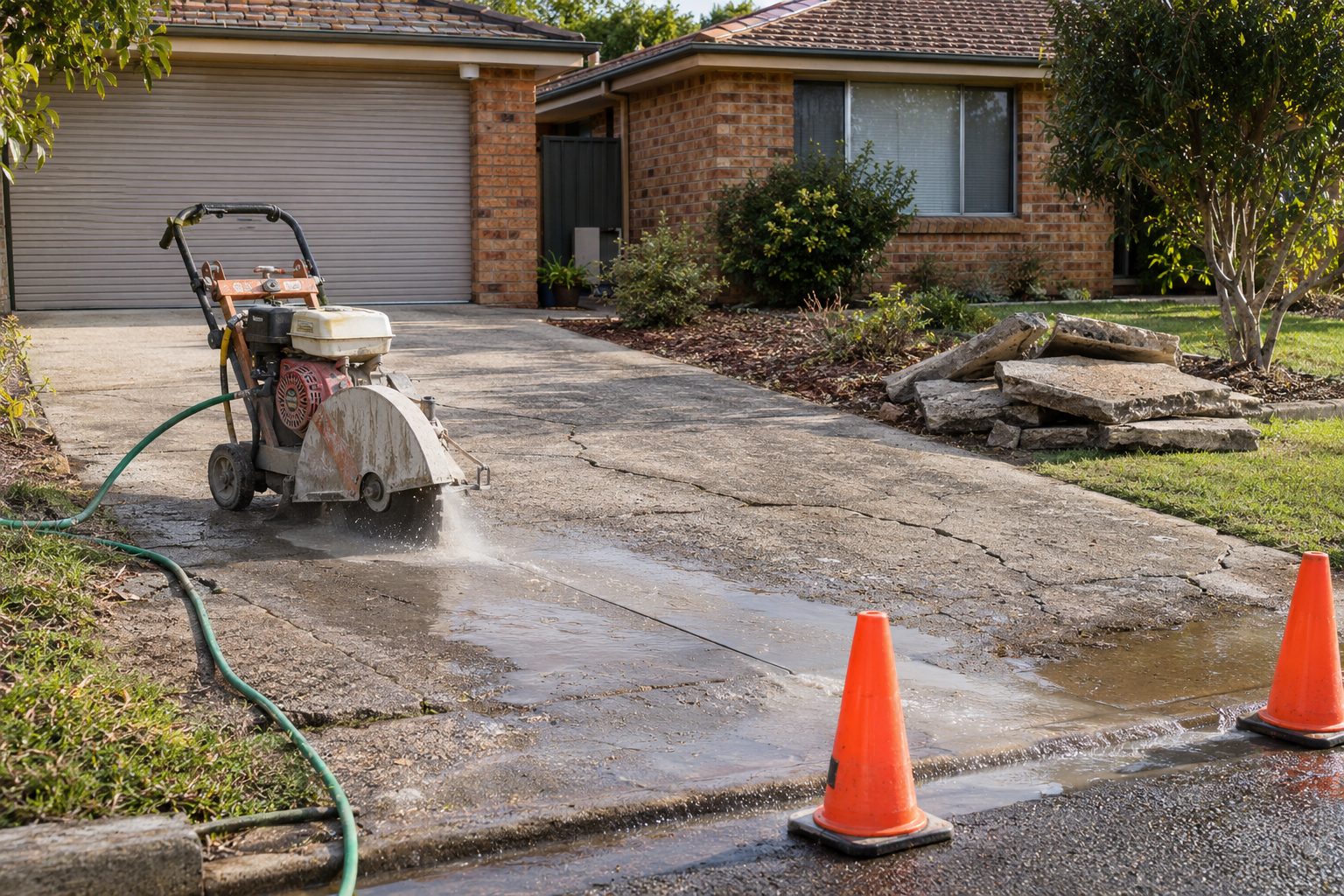
Why cutting and breaking out concrete makes dust
SafeWork NSW says construction materials such as sandstone, concrete and bricks can contain silica dust (SafeWork NSW, working safely with crystalline silica). Its technical fact sheet lists concrete among the materials that contain crystalline silica (SafeWork NSW technical fact sheet). Cutting or breaking out old concrete can put that dust in the air, and the fact sheet describes silicosis as scarring of the lung that causes loss of lung function. It says the scarring is permanent and can continue to progress after exposure stops.
The aim of this section is to explain why the questions below matter, not to alarm anyone. A homeowner can ask the concreter how dust is controlled. We do not say that any concreter does or does not comply, and we do not discuss who holds which duty under the work health and safety rules.
The controls SafeWork NSW describes
The three SafeWork NSW pages we read name a small set of controls. The table sets each beside a question you can put to a concreter.
| Control | What SafeWork NSW says | A question to ask |
|---|---|---|
| Water while cutting | Using water to control dust while cutting materials such as brick or concrete is an effective way to control exposure. It calls this a wet dust suppression method. | Is the cutting done with water? |
| On-tool extraction | A dust extraction system fitted to the tool is the other control it names. | Does the saw have on-tool extraction? |
| Dry cutting | The checklist lists brick, concrete or stone cutting, especially by dry methods, as higher risk. | Will any of the cutting be dry? |
| Masks | Workers must be given masks that meet the relevant standard and have their masks fit tested. Respiratory protection is described as a supplementary measure. | What masks will be worn? |
| Cleaning up | Avoid dry sweeping and compressed air. The checklist asks for H or M class vacuums for clean up. | How is the site cleaned afterwards? |
| A written plan | The checklist names a safe work method statement for tasks that can create respirable silica dust, and health monitoring where there is a significant risk. | Is there a written plan for the cutting? |
SafeWork NSW also gives the workplace exposure standard for respirable crystalline silica as 0.05 mg/m3 averaged over 8 hours. That is a workplace standard as the SafeWork NSW page gives it, and a household cannot measure it. It is here so you can see why the controls matter. The full checklist is on the SafeWork NSW silica safety in construction checklist.
Replacing the concrete: what to ask
When a concreter looks at the old slab, a handful of questions settle most of what a quote should say. Put the answers in writing.
- What is being cut and broken out? Agree the line and the area, and whether it includes any path or step.
- How is the base prepared again? The ground under old concrete often needs attention before new concrete goes in.
- Will the falls be reset? Ask whether water will run the same way as before, and where it will end up.
- How are cut edges finished? Ask how new concrete meets any old concrete that stays.
- How is dust controlled? Use the table above.
- How will the new slab be cured on hot days? The cracking and curing guide has the Dubbo climate figures.
The quote check guide shows how to line these up across two or three quotes. Ask the concreter for their licence details and check them on the NSW Government licence check.
Footpath work and larger replacements
If the old driveway includes the section across the footpath and kerb, council steps come into the job. Dubbo Regional Council says on its driveways, footpaths and landscaping page that footpath driveways and crossover slabs in the road reserve are built by accredited contractors, after council permission. The crossover guide sets out the steps and the questions to ask.
On your own lot, NSW state rules limit the total area of hard surfaces, such as driveways, paths and paved areas (NSW Planning, driveways, pathways and paving). A replacement that makes the area bigger may matter, so ask council or a certifier. Local housing facts for one part of town are on the South Dubbo page, and you can send an enquiry with a photo of the old concrete and how a truck could reach it.
What this guide cannot do
This guide cannot tell you how your old concrete should be removed, what the work will involve or whether any particular method is safe. It summarises three SafeWork NSW pages in plain words and has not been checked by a health and safety professional. We say nothing about what happens to old concrete once it is removed, because the sources we read do not cover it. We are a referral service: your enquiry goes to a local concreter, who decides how the work is done and is responsible for holding any licence or certificate that applies.
Check the current rules before you rely on this
This page describes the silica dust controls SafeWork NSW names for cutting concrete, and the council and state points that apply when old concrete is replaced in Dubbo. It describes the rules in general terms as they stood in November 2026. Standards, forms, thresholds and fines change.
The authoritative sources are SafeWork NSW, work safely with crystalline silica and engineered stone, SafeWork NSW, crystalline silica technical fact sheet, SafeWork NSW, checklist: silica safety in construction, Dubbo Regional Council, driveways, footpaths and landscaping (road reserve works) and NSW Planning, driveways, pathways and paving (development types). Where anything here differs from those sources, they are right and we are not.
We are not concreters, builders, certifiers, regulators or lawyers. For what applies to your job, ask the concreter for their licence details and check them on the NSW Government licence check, ask NSW Fair Trading if you are unsure, and ask the council that covers the land about approvals.
Accurate at the time of writing, November 2026. Always check the source before relying on it.